Transcript
Transcript assembled from the saved scripts for this recording. Untimed text; expression cues omitted.
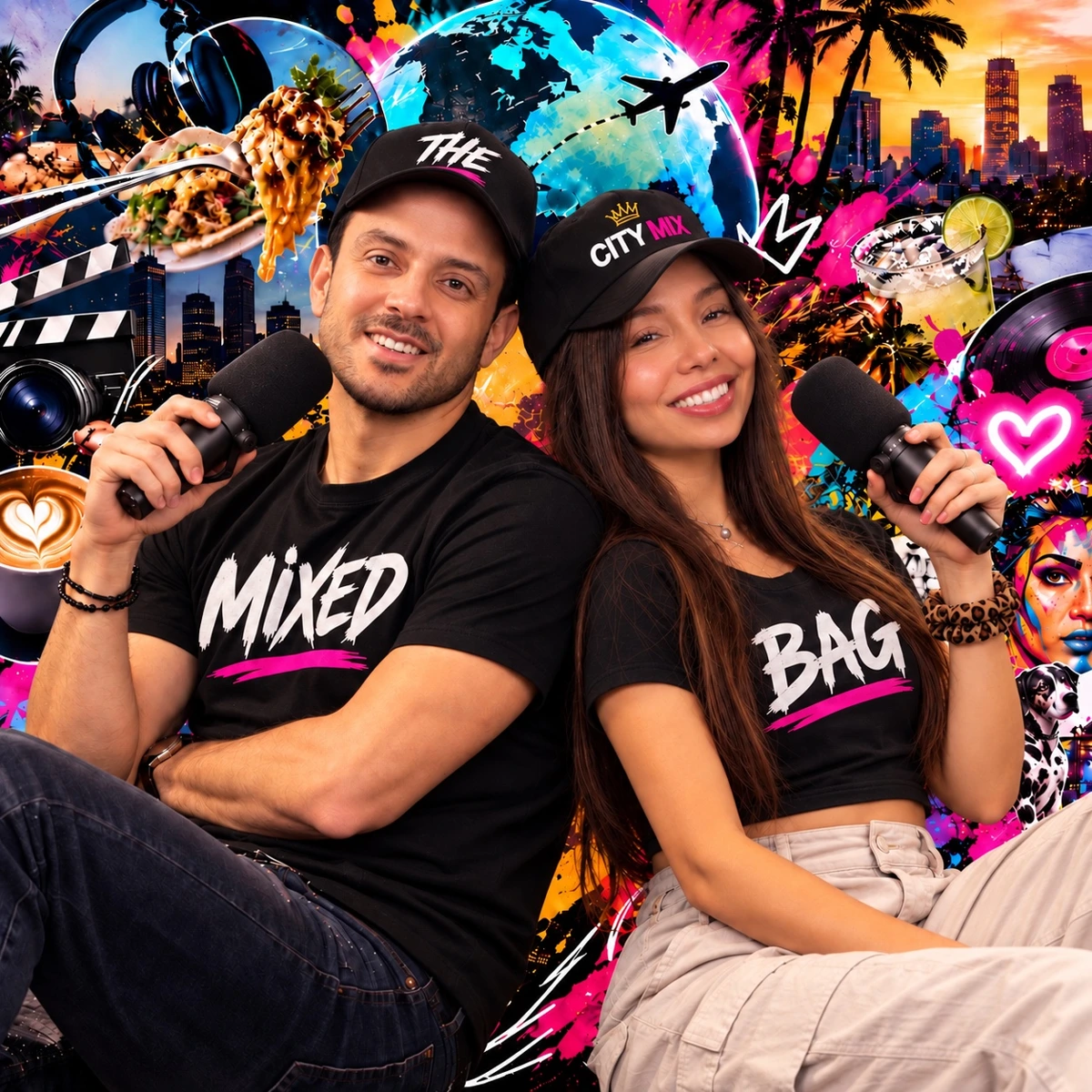
Nicole: Good morning, DMV, and happy Friday! I’m Nicole, with Carlitos. This is Beyond the Basics on The Mixed Bag. Today: before you share that unbelievable photo, what would actually help you believe it?
Carlitos: Apparently, zooming in until every pixel looks suspicious isn’t a complete investigation. At that point, I’m accusing a square of having an agenda.
Nicole: The square would like a lawyer. We’re taking a closer look at digital evidence, using guidance from NIST and the people behind Content Credentials. No mystery guest or magic detector—just better questions.
Carlitos: Let’s start with a made-up example. A dramatic crowd photo arrives in a group chat, labeled “Downtown tonight.” Before debating whether it’s AI, what should we check?
Nicole: Separate the picture from the claim. The image might be a real photograph, while that caption gives it the wrong place or date. Ask who first posted it, where the original lives and what evidence supports “tonight.”
Carlitos: So the useful question isn’t only “Is this fake?” It’s “Does this file support what the caption is asking me to believe?” That gives you something specific to investigate.
Nicole: One tool is Content Credentials, based on the C2PA standard. They can attach a signed record of a file’s origin and editing history, including declared use of AI. Think of that as information about its journey.
Carlitos: But a recorded journey isn’t the same as proof that everything pictured happened exactly as described. A camera could photograph a staged scene. The file’s history and the scene’s meaning are separate questions.
Nicole: Exactly. C2PA’s own explainer says its credentials do not judge whether the recorded information is true. Validation checks things such as the signature, whether the record was altered, and its connection to the file.
Carlitos: A digital signature isn’t a little detective inside your phone whispering, “I interviewed everybody.” It’s evidence with a particular job. Ask it to do that job, rather than every job.
Nicole: And a missing credential isn’t proof of fabrication. The Content Authenticity Initiative explains that a screenshot doesn’t carry over the original image’s C2PA metadata. Some systems may help recover associated records, but that isn’t automatic everywhere.
Carlitos: Which is a good reason to ask for the original link or file. A screenshot of a screenshot may give you less to examine, even when the underlying photograph is completely ordinary.
Nicole: What about uploading the picture to an AI detector? NIST describes detection tools as one part of the toolkit, with limitations. A detector can incorrectly flag authentic material or miss synthetic material.
Carlitos: Those mistakes matter. If a tool flags somebody’s work, that alone shouldn’t become a public accusation. And if it gives a reassuring result, that doesn’t verify a date, a location or a caption.
Nicole: NIST also notes that detectors often work best on output from generators they were trained on. So ask what the tool was evaluated against and whether that resembles the material you’re checking. One confident-looking score is not the whole case.
Carlitos: The percentage sign is wearing a lab coat. We still need to ask where it studied. So what can a regular listener actually do before hitting share?
Nicole: Try three questions: source, context, confirmation. Source: can you reach the original post or publisher? Context: does the full image or clip support the caption? Confirmation: can you find independent evidence for the specific claim?
Carlitos: In our imaginary crowd example, look for the original date and location. Compare with reliable reporting or the organizer’s own material. Ten accounts repeating one upload are ten repetitions, not ten independent witnesses.
Nicole: If it’s still unresolved, you don’t have to solve the entire internet. You can pause, ask for the original, or say you haven’t verified it. Uncertainty is useful information, too.
Carlitos: And checking something doesn’t require insulting the friend who sent it. “Do you have the original link?” keeps the conversation open. That is a much better group-chat opening than convening a digital courtroom.
Nicole: Today’s takeaway: a credential adds history, a detector adds a signal, and neither replaces checking the claim. Our three-question routine is an editorial starting point, not a guarantee. The research links are in the episode notes.
Carlitos: I’m Carlitos. And I’m officially retiring “looks real to me” as my entire evidence policy. Have a good Friday, DMV—take a breath before you forward.
Nicole: I’m Nicole. Tell us what you’d ask a photo editor or verification specialist about a suspicious image. We can use those questions to shape a future conversation.
Carlitos: Thanks for joining Nicole and me on Beyond the Basics, from The Mixed Bag. Stay curious—and let the pixels have a peaceful weekend.